CA Defines eBikes and eMotos
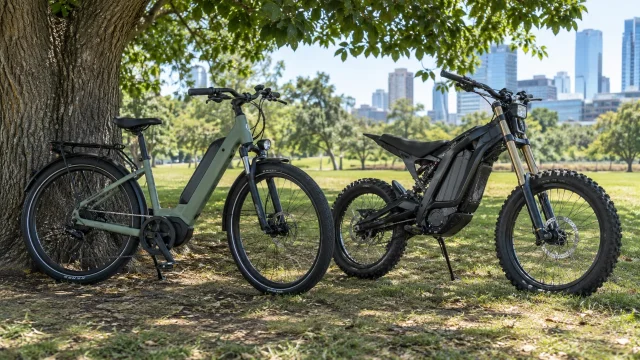
California has officially signed Senate Bill 1167 into law, tackling a growing source of neighborhood tension and confusion: the grey area between electric bicycles and high-powered eMotos. Introduced by Senator Catherine Blakespear and supported by cycling and safety advocates, the legislation targets fast, throttle-heavy two-wheelers that have blurred regulatory boundaries on public roads, sidewalks, and multi-use paths.
For many drivers and residents, this clarification comes not a moment too soon. Community members frequently express frustration over seeing teenagers operating high-powered, motorcycle-style electric bikes—such as Sur-Rons, Talarias, or Super73s modified for high speeds—weaving through traffic or speeding down pedestrian paths without helmets or license plates. Much of this stems from misleading marketing that labeled these vehicles as "e-bikes," leading parents and young riders to assume they could be legally ridden anywhere a pedal bike goes.
SB 1167 eliminates that confusion by establishing strict statutory definitions and labeling rules:
- Traditional eBikes: Must feature operable pedals, have motors capped at 750 watts, and provide assistance up to 20 mph (Class 1 and 2) or 28 mph (Class 3). Only these vehicles qualify as standard electric bicycles.
- Electric Mopeds (Up to 3,000 Watts / 4 HP): Vehicles reaching up to 30 mph fall into the moped class, regardless of whether pedals are installed.
- Motor-Driven Cycles & E-Motorcycles (Up to 3,750+ Watts): High-powered eMotos like standard Sur-Rons, which often generate upwards of 5,000 to 6,000 watts and exceed 45 mph, are legally classified as motor-driven cycles or full motorcycles.
Under the new law, it is illegal for manufacturers or retailers to market or label high-powered eMotos as regular eBikes. Furthermore, operating an eMoto on public roads requires full vehicle code compliance: riders must hold an M1 or M2 driver's license, carry insurance, register the vehicle with the California DMV, and stay off multi-use bike paths and sidewalks entirely. By drawing this clear line, SB 1167 protects legitimate micro-mobility while giving law enforcement the clear legal authority needed to address dangerous off-road motorcycle use in suburban traffic.
